
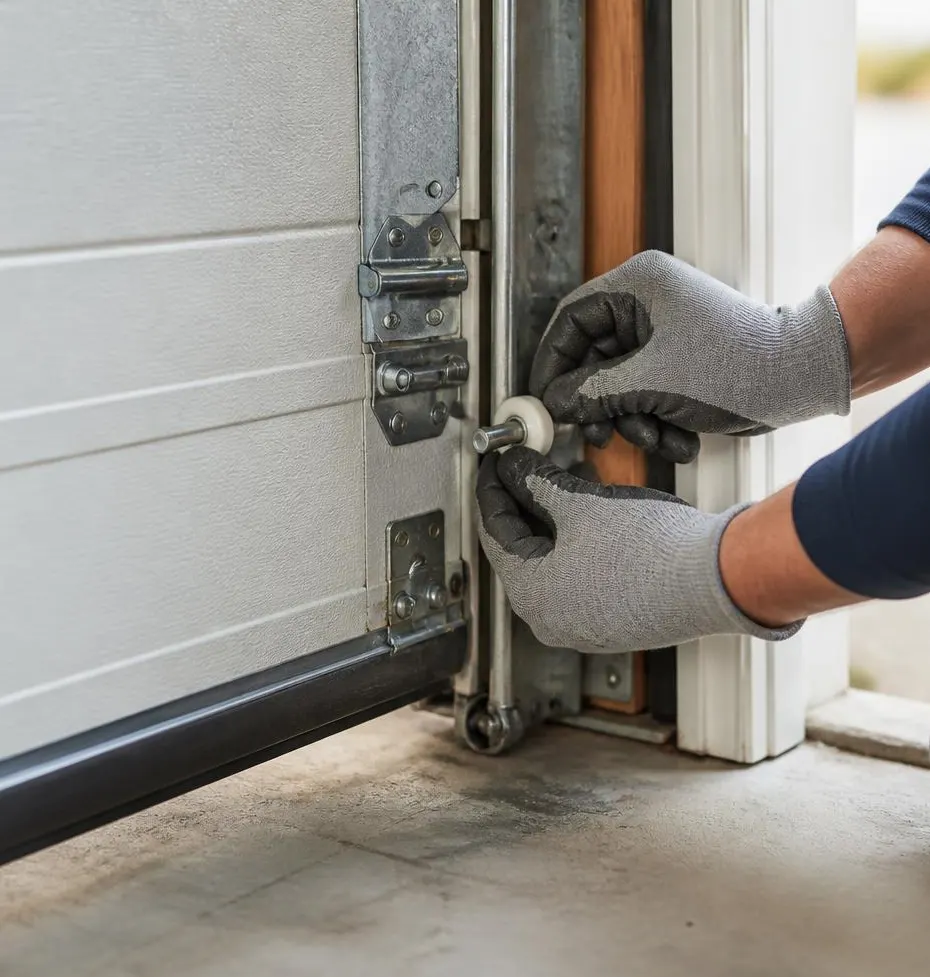
If your garage door feels sluggish or stuck on a chilly morning, it's almost never actual ice — it's humidity, rust, or thickened lubricant pretending to be a freeze. The exception: during the handful of hard cold snaps each winter when overnight temps dip into the 30s, condensation sitting on the weatherstripping or the slab can genuinely freeze into a thin bond that glues the bottom seal to the concrete for an hour or two after sunrise. Both situations look similar from inside the garage, so the symptoms are where you start.
Symptoms to Watch For
- The opener hums or strains but the door doesn't move at all
- The door lifts an inch or two, then stops like something caught it
- You hear a tearing or cracking sound right as the door breaks free
- The door rises unevenly, with one side noticeably higher than the other
- It takes visibly more muscle to lift by hand than it did a few days earlier
- The opener's light blinks an error code, or the door reverses mid-cycle
None of these symptoms alone tell you the cause — that's why a technician works through them in order, starting with the cheapest and most obvious checks first.
Working Through the Causes
1. Bottom Seal Stuck to the Slab
This is the first thing to rule out because it's fast to check and easy to fix. On a cool, damp morning, condensation trapped under the rubber weatherstrip can freeze into a thin film that bonds the seal to the concrete overnight. Forcing the opener in this situation can tear the seal or strain the opener's drive gear. The fix is simple: skip the opener, run a hair dryer or warm water along the seal line, and gently work a putty knife underneath to break the bond. If the weatherstrip is already cracked or brittle from a few summers of UV exposure, this is also a good time to replace it — old, stiff rubber bonds to concrete more easily than fresh weatherstripping.
2. Rusted or Debris-Packed Tracks
Next, look at the tracks themselves. Homes closer to the water pick up salt air that pits steel tracks with surface rust over time, and that roughened metal grabs the rollers especially when everything's damp from an overnight dew or a late-afternoon downpour the day before. A tech checks for visible rust, bent sections, and debris buildup. The fix is cleaning the tracks with mild soap and water, light sanding on rust spots, straightening any bends, and applying a garage-door-rated lubricant — not a household spray like WD-40, which actually attracts grit and makes the drag worse over time.
3. Rollers and Hinges That Have Dried Out
Dunedin's humidity swings are tough on hardware. Steel rollers rust, nylon rollers can swell or crack, and hinge pivots bind up without regular lubrication. A sluggish door that moves in jerky stages, rather than smoothly, usually points here. The fix involves lubricating every pivot point, swapping out pitted or cracked rollers, and tightening hinge screws that have worked loose from repeated expansion and contraction.
4. Spring Tension Shifting With the Temperature
Cooler air makes steel contract slightly, and a spring that's already near the end of its service life will often show it first on a cool morning — sluggish lift, uneven travel, or a door that won't fully open. This is where a technician stops guessing and starts measuring tension, because springs under load are genuinely dangerous to adjust without the right tools. If the spring is worn, this is a straightforward repair or replacement, not a patch job.
5. Swollen Panels Rubbing the Track
Wood and composite panels absorb moisture, and after a heavy afternoon storm followed by a cool, damp night, a panel edge can swell just enough to drag against the track. This shows up as resistance concentrated at one specific point in the door's travel, rather than the whole door feeling heavy. The fix is sanding or trimming the swollen edge, resealing the exposed material, and adjusting the track if needed so it isn't riding tight against the panel.
6. Opener Tension and Limit Settings
Last on the list because it's the least likely culprit, but worth checking: cold can slightly tighten a chain or belt drive, and that change in tension can trip the opener's force sensors, making it think the door hit an obstruction and reverse. The fix is recalibrating the chain or belt tension and retesting the limit and force settings so the opener isn't fighting itself.
When to Call Dunedin Garage Door Repair
If you've broken the seal free and the door still drags, jerks, or won't fully open, stop operating it — a door forced past a stuck point or a failing spring can jump the track or snap a cable. Our Garage Door Tune-Up & Maintenance service covers exactly this kind of seasonal check: tracks, rollers, hinges, and spring tension, before a cold front turns a minor drag into a dead stop. If the door has already popped off its track trying to force it, our Off Track Garage Door Repair gets it back in line and checks for bent hardware before it becomes a bigger repair.
If your garage door is sticking, dragging, or sounding off on cool mornings, call Dunedin Garage Door Repair for same-day service across Dunedin and the surrounding Pinellas County area — we'll find the actual cause before it turns into a door that won't open at all.