
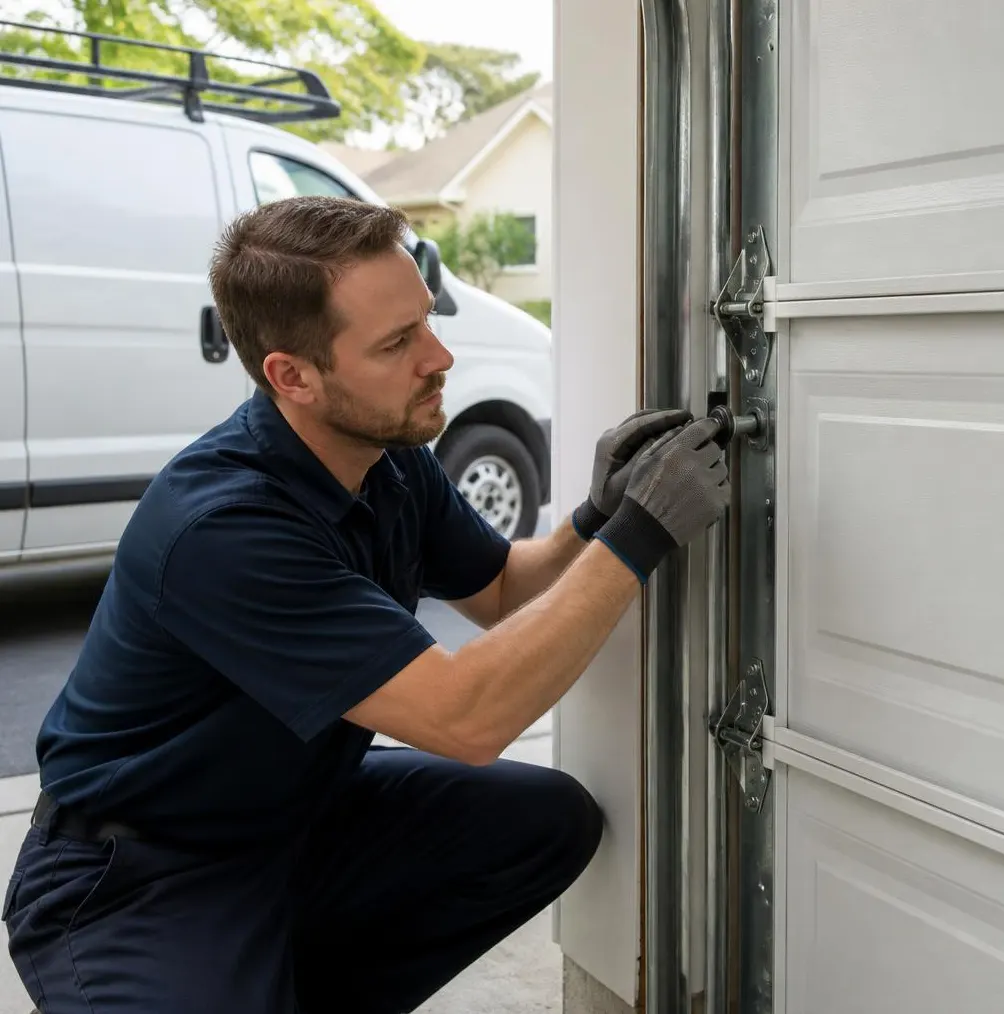
Most noisy garage door openers can be quieted in an afternoon with a few wrenches, some lubricant, and rubber isolation hardware. No technician required for that part. But if the racket is coming from a worn drive belt, stripped gears, or a chain-drive system vibrating through the house frame, the real fix is a belt-drive opener swap, and that's a job for a professional.
Here's how to work through it in order, cheapest and easiest fixes first.
Tools You'll Need
- Socket set and adjustable wrench
- Garage door lubricant (silicone-based or lithium grease spray, not WD-40 for long-term lubrication)
- Rubber isolation washers or anti-vibration pads (sold for garage door openers)
- Flashlight
- Step ladder
- Rag or shop towel
Step 1: Figure Out What Kind of Noise You're Hearing
Noise type tells you where to look. A rhythmic clicking or popping usually means loose hardware. Grinding or squealing points to dry rollers or a worn chain. A loud bang when the door starts or stops often means the opener's drive gear is stripped. A rattling vibration that carries through the ceiling and into the house is classic chain-drive transfer, and no amount of lubricant fixes that one.
Step 2: Tighten Everything
With the opener unplugged, go over every nut and bolt on the track, hinges, and the opener mounting bracket. Dunedin's humidity causes metal to expand and contract, and afternoon storm vibration from wind-driven rain slowly works bolts loose over a season. A quarter-turn tightening pass twice a year keeps rattles from starting in the first place.
Step 3: Lubricate the Moving Parts
Spray lubricant on the hinges, rollers, and the opener's chain or screw drive. Wipe off excess so it doesn't attract dust and grit. Salt air near the coast accelerates corrosion on exposed metal hardware, so homes closer to Clearwater Beach or the water in Dunedin benefit from lubricating more often, closer to every 90 days instead of twice a year.
Step 4: Add Rubber Isolation
Most opener noise that travels into living space comes from metal-on-metal contact between the motor unit and the ceiling bracket. Rubber isolator washers, installed where the mounting bracket bolts to the ceiling, absorb that vibration before it spreads. This is a 15-minute fix and one of the highest-impact cheap upgrades available.
Step 5: Check the Rollers
Open the door partway and look at the rollers as they move through the track. Plastic or nylon rollers wear out and start wobbling, which causes grinding noise and uneven movement. They're inexpensive to replace and this is still homeowner-level work, as long as you're comfortable with the spring-loaded tension involved. If you're not, stop here.
Step 6: Test the Door's Balance
Disconnect the opener and lift the door by hand halfway up. It should stay in place on its own. If it drifts up or crashes down, the spring tension is off, and that imbalance forces the opener motor to work harder, which shows up as noise and premature wear. This is where DIY should stop. Garage door springs are under heavy tension and incorrect adjustment can cause serious injury.
What's a DIY Job and What Isn't
- Homeowner-safe: tightening hardware, lubricating hinges and rollers, installing isolation washers, swapping worn plastic rollers
- Call a technician: spring tension adjustment, chain-to-belt drive conversion, stripped gear replacement, off-track or bent rail repair
When the Fix Is a Belt-Drive Swap
If you've lubricated, tightened, and isolated everything and the opener is still loud, the chain itself is likely the culprit. Chain-drive openers are inherently noisier, and years of humidity and swelling door panels put extra strain on the system, which shows up as grinding and banging over time. Swapping to a belt-drive opener eliminates the metal-chain vibration entirely and is the most reliable long-term fix for a consistently loud unit.
When to Call Dunedin Garage Door Repair
If your door is out of balance, the opener bangs or grinds no matter what you try, or you want a belt-drive upgrade done correctly the first time, that's where we come in. Dunedin Garage Door Repair handles Garage Door Opener Installation and Garage Door Tune-Up & Maintenance for homes throughout Dunedin, Clearwater, Palm Harbor, and the surrounding Pinellas County area. We'll diagnose the actual source of the noise, check spring tension safely, and install a quiet belt-drive system built for Florida's humidity and storm season.
If your garage door opener has gotten loud enough to notice from inside the house, give Dunedin Garage Door Repair a call. Same-day service is available for homeowners across Dunedin, FL, and we'll have it running quiet again fast.